
Our story
As told by Meenu.
He was a few weeks old when we first noticed that Ruzbeh, our son, was not looking at us, his gaze not focussing on objects around him. It took 2 months of frantic consultations with specialists before we finally found an ophthalmologist who knew the reason why Ruzbeh had no vision. The doctor was convinced that Ruzbeh was born with the rare genetic disorder called Norrie disease (ND), because of which his retinas were detached, and that this is irreversible. The news was a hammer blow, and I burst into tears.
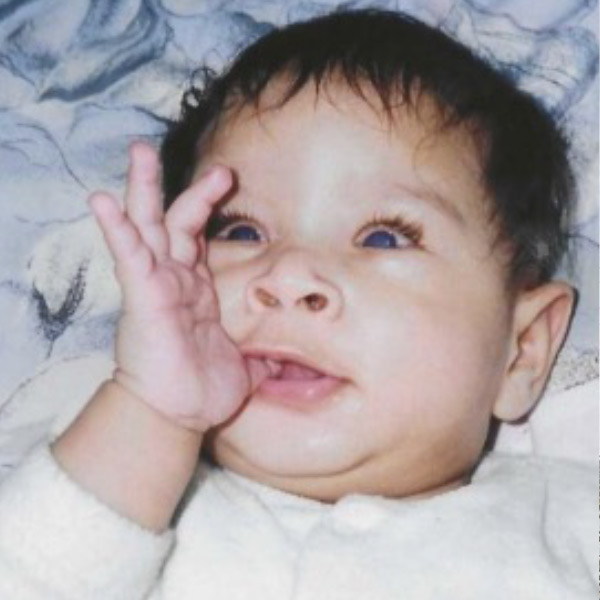
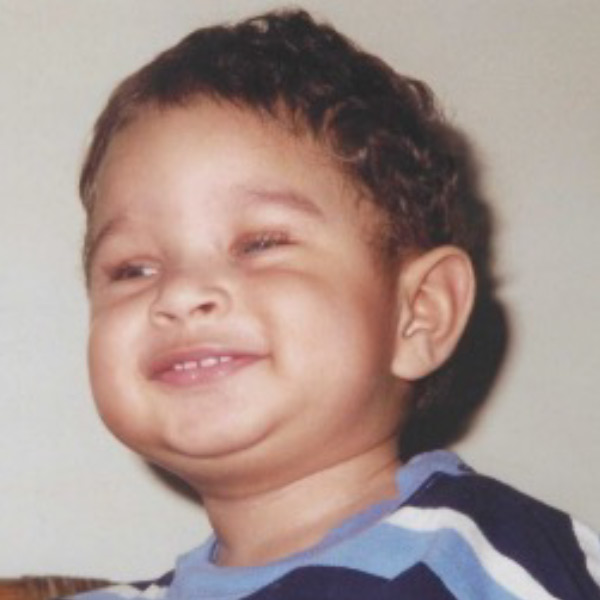
Subsequently a blood test confirmed that Ruzbeh was indeed born with ND. I had no idea what Norrie disease was. I also struggled to understand how this could have happened since there was no previous case of any genetic disorder in the family. It was only later that I learnt that I am a carrier.
I tried to move past the melancholy and the grief by busying myself with taking care of Ruzbeh. I read books on how to raise a blind child. I thought that with the right education Ruzbeh would be able to live an independent life.
Little did I know that my son’s lack of vision was going to be the least of his problems.
Ruzbeh was 2 years old when our small family of three moved from New Delhi, India to Geneva, Switzerland. He was yet nonverbal and this had us worried. We consulted therapists, and after many sessions of observing Ruzbeh and of interacting with him, they gave us the shocking news that he is on the autism spectrum [Up to 50% of ND patients present with autism, cognitive impairment, seizures]. Thankfully he started speaking a few months later, but his behaviour remains distinctly autistic and necessitates round-the-clock care and supervision.
[ Here are some of Ruzbeh’s present day autistic traits: difficulty in managing negative emotions (such as frustration) which results in episodes of screaming, shouting and hitting his head, very high levels of anxiety, disturbed sleep, rapid, nonstop & repetitive talking and making us repeat everything he says ]
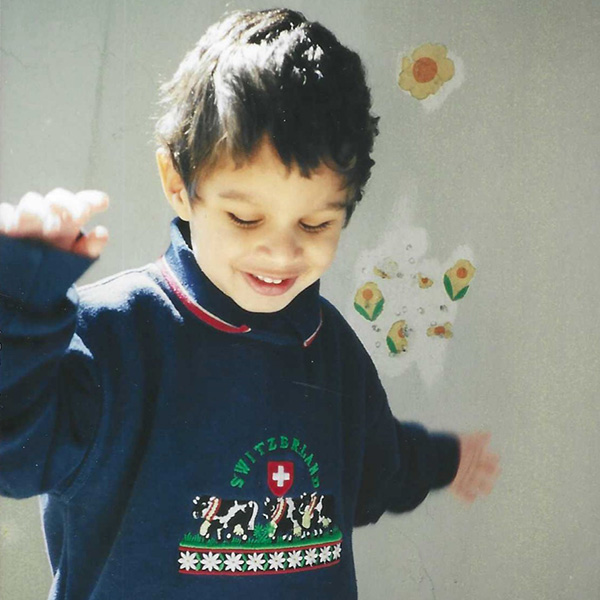
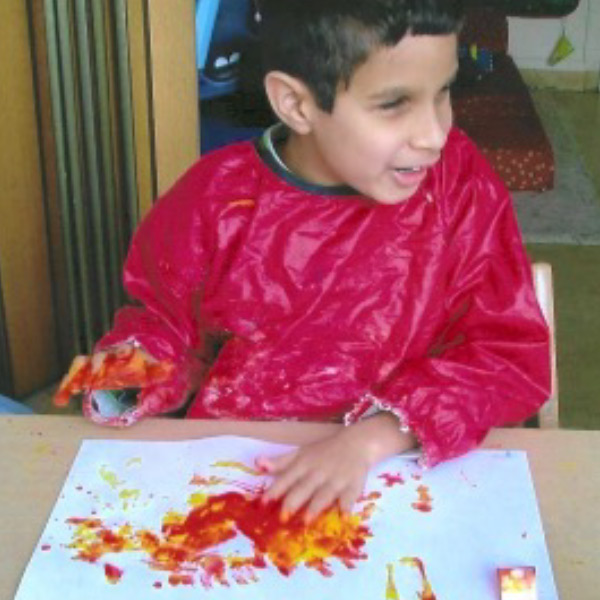
With this news, our hopes of enrolling Ruzbeh in a school for the visually impaired and blind came crashing down. Unable to cater to the needs of a blind and autistic child, they refused a placement. There was no option other than to enrol him in a school for mentally disabled children. The teachers did their best to adapt their activities for a child with no vision, but it broke my heart when children at school pulled Ruzbeh’s hair or scratched him; being blind he had no way to anticipate their moves and was unable to defend himself.
I also struggled to find extra-curricular activities which could accommodate the twin disabilities of blindness and autism.
But even this was not the end of the nightmare that is Norrie disease.
We had read on the internet that patients of ND experience progressive hearing loss. As the disease progresses, their hearing declines and they become profoundly deaf in mid to late adulthood. Ruzbeh was 12 when he was diagnosed with mild hearing loss and his hearing has indeed declined since then.
Being autistic, he seldom wears his hearing aids.
Patients of ND also complain of episodes of sudden hearing loss (SHL). This is very unsettling and anxiety provoking because they suddenly hear less or nothing in one ear. In addition, a dull feeling of pressure in the ear can occur and tinnitus noises such as whistling or ringing may also be perceived. I know Ruzbeh is experiencing SHL when he complains of a blocked ear and looks very distressed. If the discomfort persists, he hits his head repeatedly out of sheer frustration – one of the hallmarks of autism being difficulty in managing extreme emotions – until the SHL subsides. I feel so helpless.
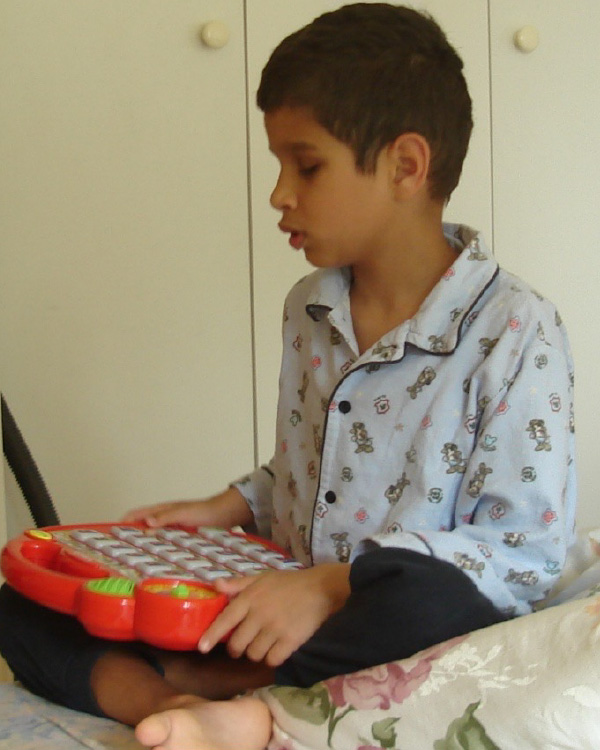
We live in a state of constant fear – afraid of the day when Ruzbeh will not be able to hear anymore. In the absence of vision, he relies on his hearing to be able to make sense of the world around him. How will he manage without it?
Over the years, I have connected with several parents of children born with ND, and their stories echo mine.
Thanks to the efforts of some parents, research for the symptom of hearing loss is ongoing. But there is more to be done. While studies have shown promising results in stopping the progression of hearing loss in a mouse model for the disease, we need more funding to translate this into a treatment for human patients. We also need to look for a treatment for the brain related symptoms of ND. This is why I have created this association which is a legally recognized charity. I know it is very hard to raise funds for rare disease research because the patient community is very small, but I refuse to give up.
At present Ruzbeh is a resident of the Centre des Marmettes, a residential facility for the deafblind, managed by the FRSA (Fondation Romande SourdAveugles – Foundation for the deafblind in French-speaking Switzerland) in Monthey, Valais. We are very fortunate to have found this place because the living conditions and activities are adapted for Ruzbeh’s dual sensory loss (blindness and hearing impairment) and it also provides the structured environment that is so necessary for an autistic individual.
He is learning to read and write braille.
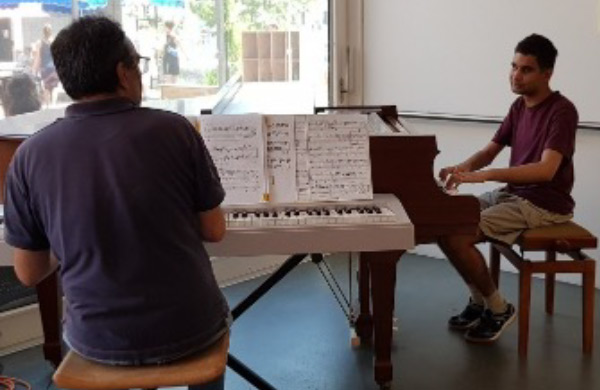
He has an extraordinary memory. He loves listening to music and enjoys playing the piano.
Some of his favourite activities are bowling, karaoke, horse riding, skiing, snowshoeing, and walking in the mountains.